Who Actually Authorized That?
Your system knows who approved the payment. It probably can't tell you who gave that person the legal authority to approve it. Follow one $8,000 invoice back through the chain of delegation, from the manager to the director to the CFO to the board, and see what a role in an access-control system does and doesn't establish. Nobody can give away authority they don't hold, and a system should check that when a delegation is issued and again when it's used.
All posts
16 entries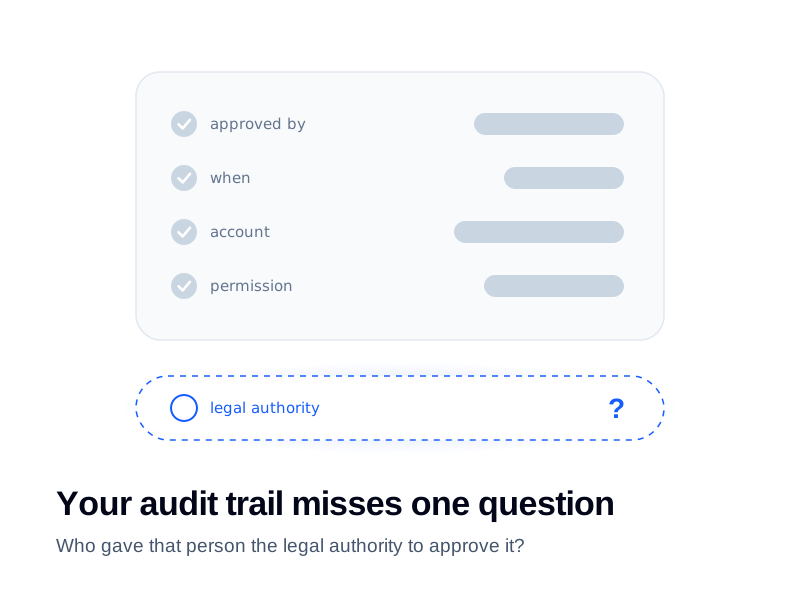
Who Actually Authorized That?
Your system knows who approved the payment. It probably can't tell you who gave that person the legal authority to approve it. Follow one $8,000 invoice back through the chain of delegation, from the manager to the director to the CFO to the board, and see what a role in an access-control system does and doesn't establish. Nobody can give away authority they don't hold, and a system should check that when a delegation is issued and again when it's used.
Every Grant Carries Six Limits, Whether or Not Anyone Wrote Them Down
A permission in a system is a yes or a no. A grant of legal authority is a yes with limits: what may be done, how much, for what purpose, where, until when, and from what. Those six limits are always there. Today they live in a lawyer's head, and that is why a machine cannot measure a request against them.
The Permission That Outlived the Grant
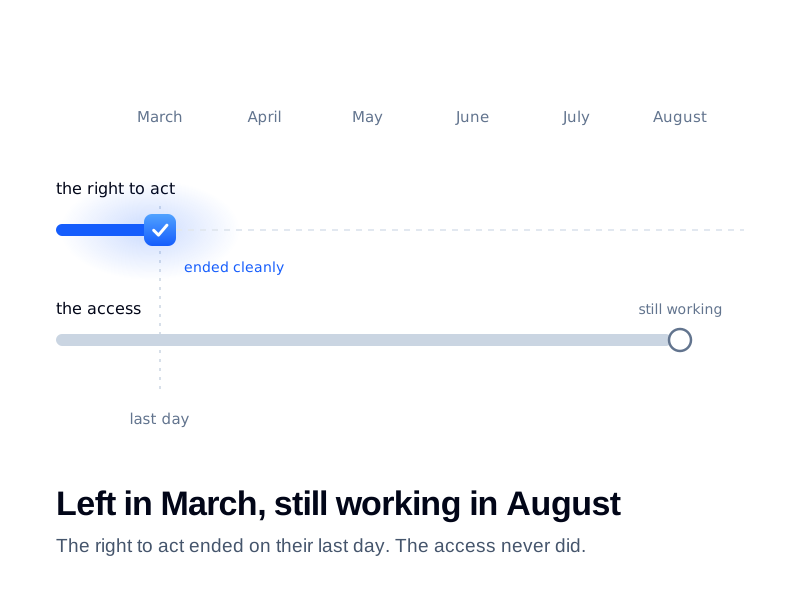
Someone leaves your company in March. Their legal right to act for it ends that day. Their access is still working in August. Those two things were meant to be one fact written down twice, and nothing in the modern stack was ever asked to check one copy against the other.
A Graph of Graphs, Not a Chain
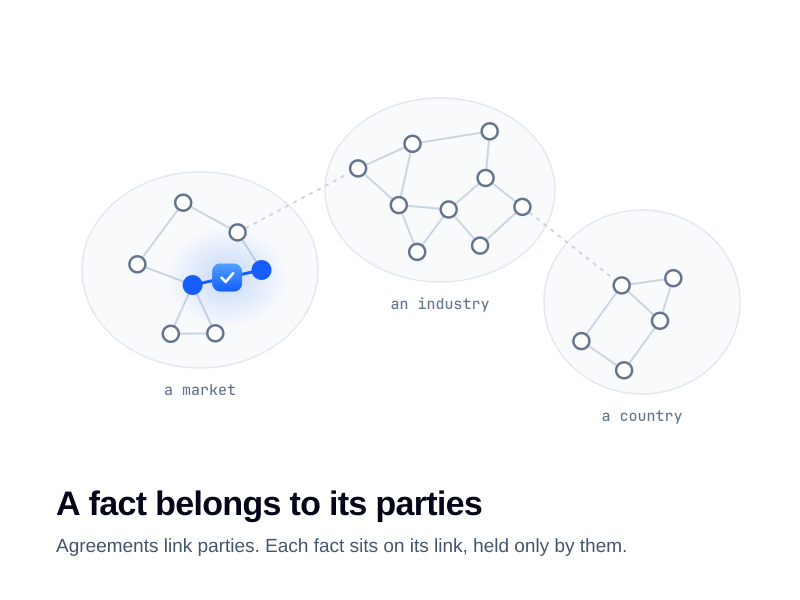
The word ledger has come to mean one sequence of everything, agreed by everyone. But almost no fact in commerce is everyone's business. A record should be agreed where it belongs, among the parties to it, and the shape that produces is not a chain. It is a graph of graphs.
The Industry Solved Settlement and Called It the Whole Transaction
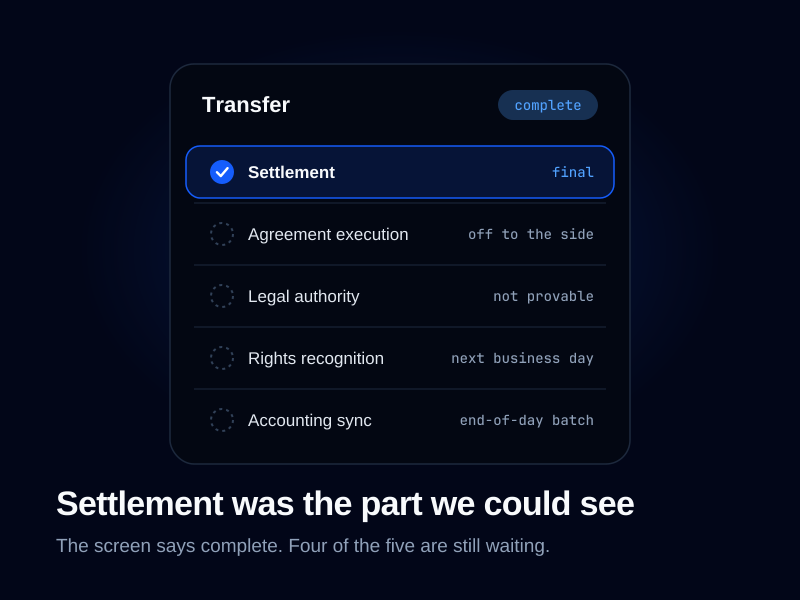
A commercial transaction has five parts, and nothing has really moved until all five are true. The digital asset industry spent more than a decade solving one of them, did it well, and then started using the word settlement as if it meant the whole thing. The other four are still open, and the reason is the same for each.
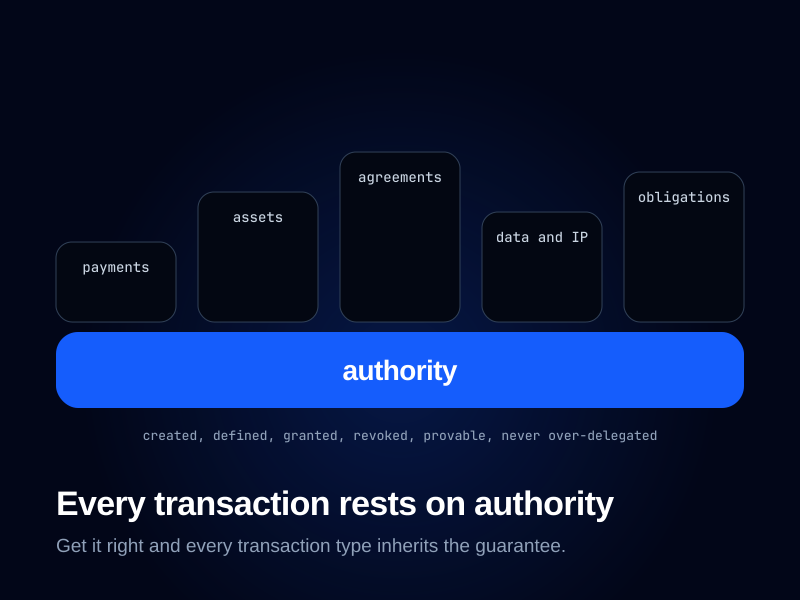
Agents Will Transact Everything. Authority Comes First.
AI agents are about to transact everything: money, assets, agreements, rights. None of it works until we solve the thing underneath all of it. Not speed. Authority.
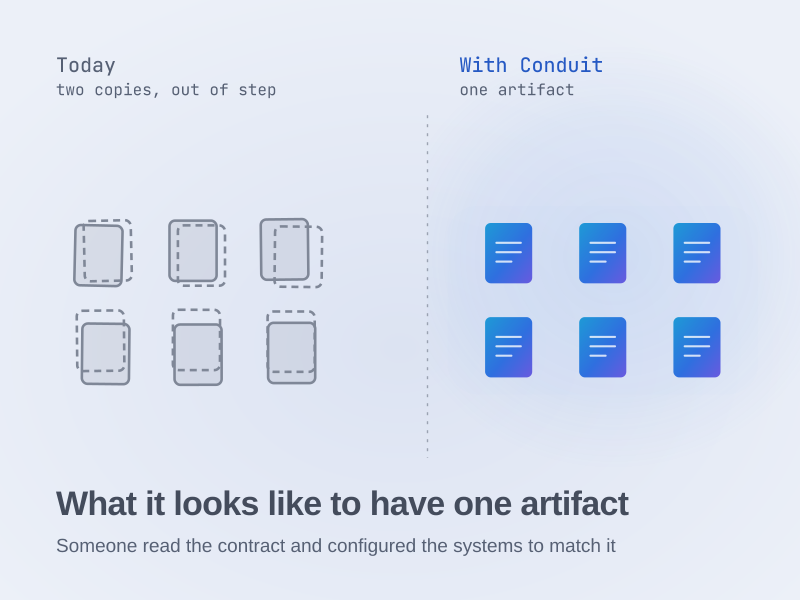
The Contract Says One Thing. Your Systems Do Another.
Every commercial relationship starts with an agreement and a set of systems that are supposed to carry it out. They begin aligned and then, quietly, they drift. Most of what is expensive and contentious in business lives in the gap between what was agreed and what actually executes.
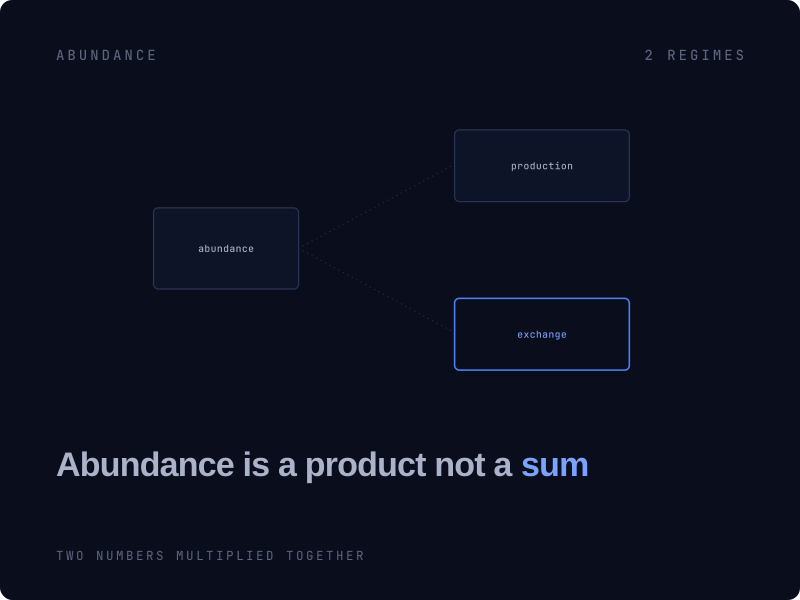
Elon Musk Is Right About Abundance. The Hard Part Is the Other Half.
Musk says AI and robots are bringing an age of abundance where money stops mattering. He's right about production. Exchange is the other half, the one that decides whether abundance arrives.
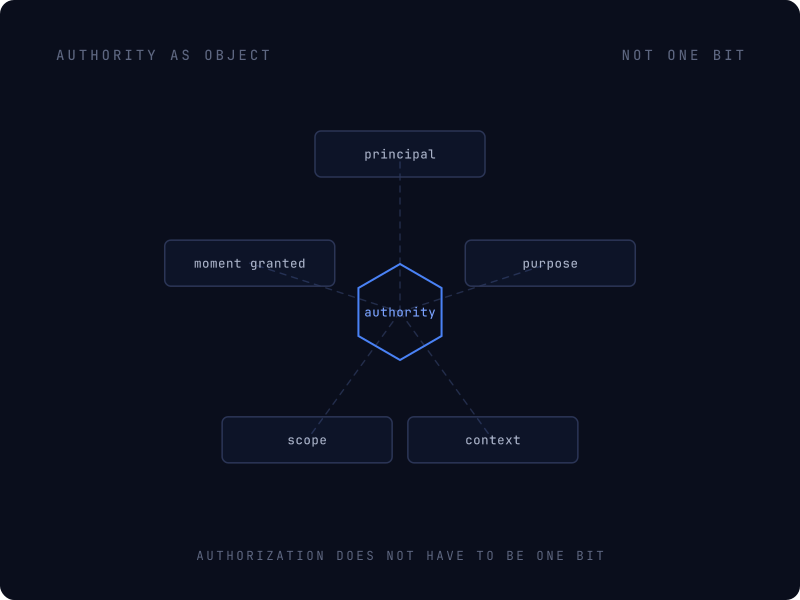
In the Zelle Lawsuit, Everything Turns on One Slippery Word: 'Authorized'
A New York judge just let the state's fraud case against Zelle's operator proceed. Strip away the headlines and the whole fight, and the billion dollars riding on it, comes down to what 'authorized' means when a person is tricked into sending money themselves.
Built on the same primitives.
Intelligent Instruments
The custody record is the instrument.
Learn more →Agentic AI
Governed agent trading with provable authorization chains.
Learn more →Rewards
Participation that reduces your costs.
Learn more →Telecommunications
Where fiber ends, the network self-governs.
Learn more →